What does it actually mean to be "the IT department" for a small business?
If you're working helpdesk right now, someone has probably told you to "get out of support and become a consultant." It sounds like a promotion. Nobody tells you what the job actually is.
I've done this for over 30 years — consultant, technical manager, project manager, administrative manager, teacher, often all in the same week. For most of that time, my actual job has been simple to describe and hard to live: I'm hired to be the entire IT department for companies too small to have one of their own, usually somewhere between 5 and 25 employees.
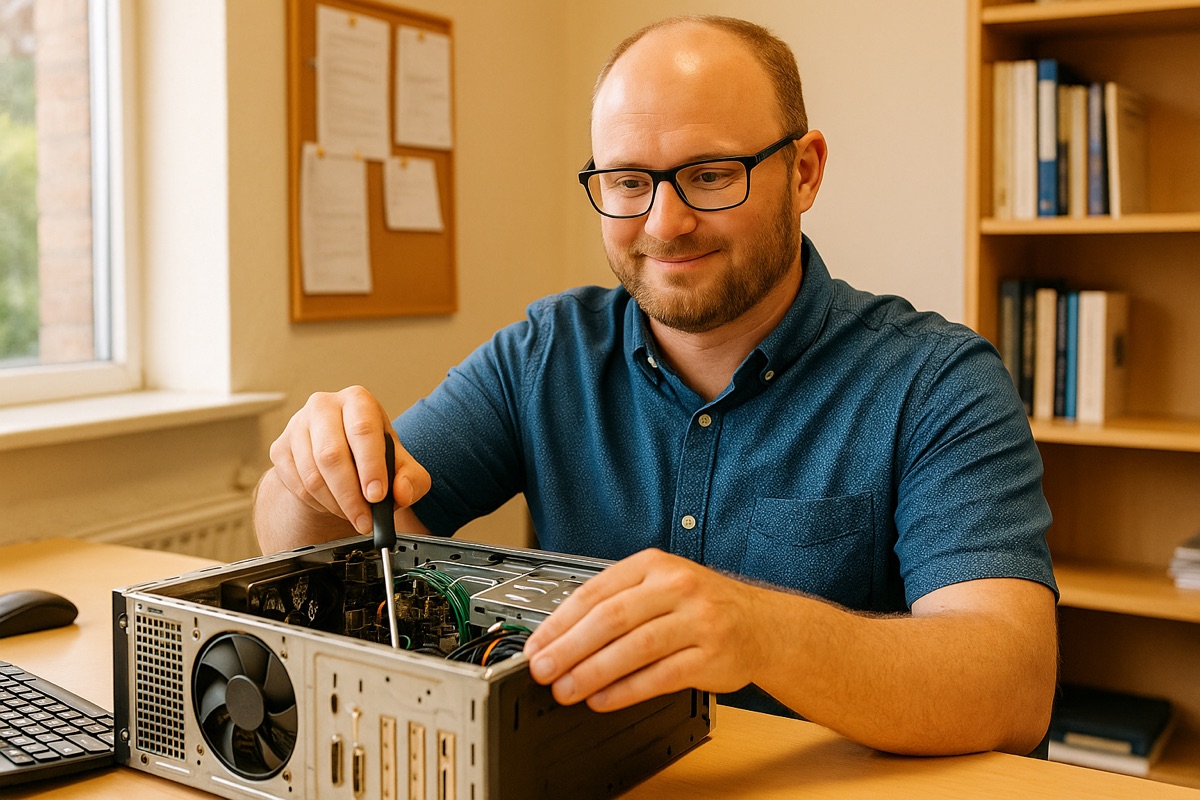
You're not "support" anymore

At a company that size, you're IT strategy, budget, procurement, security, training, and support — in one person. When something breaks, you fix it. But you're also the one who chose the hardware two years ago, and the one who has to explain, in plain language, why the accounting software needs a server upgrade before Q4.
At a bigger company, someone else handled networking, someone else handled backups, someone else dealt with vendors. Here, it's all you. If a backup fails silently for three weeks and nobody notices until a laptop gets stolen, that's on you — not because you were careless, but because there's no second person checking your work.
Most of the job isn't glamorous

The technically interesting problems — the ones you picture when you imagine "being a consultant" — are maybe 10% of the week. The other 90% is phones, a printer that won't connect, someone who forgot their password again, patiently explaining why they can't install random software. Keeping IT invisible is the job. Done right, the owner forgets you exist until something breaks.
You're a business now, whether you feel like one or not
Every company you serve is a client, not an employer. A helpdesk manager gives you tickets. A client gives you trust — and trust is fragile in a way tickets never are. Be slow, be unclear, disappear for a week, and they won't file a complaint. They'll quietly start looking for someone else.
The trade nobody names

This path isn't a straight upgrade from helpdesk — it's a trade. Structure for autonomy. A predictable paycheck for one that depends on how many clients you can serve well. "Someone else worries about the business side" for "you are the business side" now. Some people look at that trade and go back to a structured job. That's not failure. That's knowing yourself.
If you get it right, though, you become one of the most valuable people that small company has — because you're the only one who understands the thing everything else in the business now runs on.
Next: the actual skills gap between helpdesk and this job — what you need to build before making the jump.